

WASHINGTON, DC — Defense Secretary Pete Hegseth announced Thursday that the future of American military power will depend largely on identifying which parts of the past were better and then returning to them as quickly as possible.
“We became the greatest fighting force in the world back when standards were standards,” Hegseth said, referring broadly to an era before women could vote or serve in most military roles.
Pentagon officials said the department is currently reviewing military practices from the late 19th and early 20th centuries to determine which could be restored as part of Hegseth’s broader effort to eliminate unnecessary modernity from the armed forces.
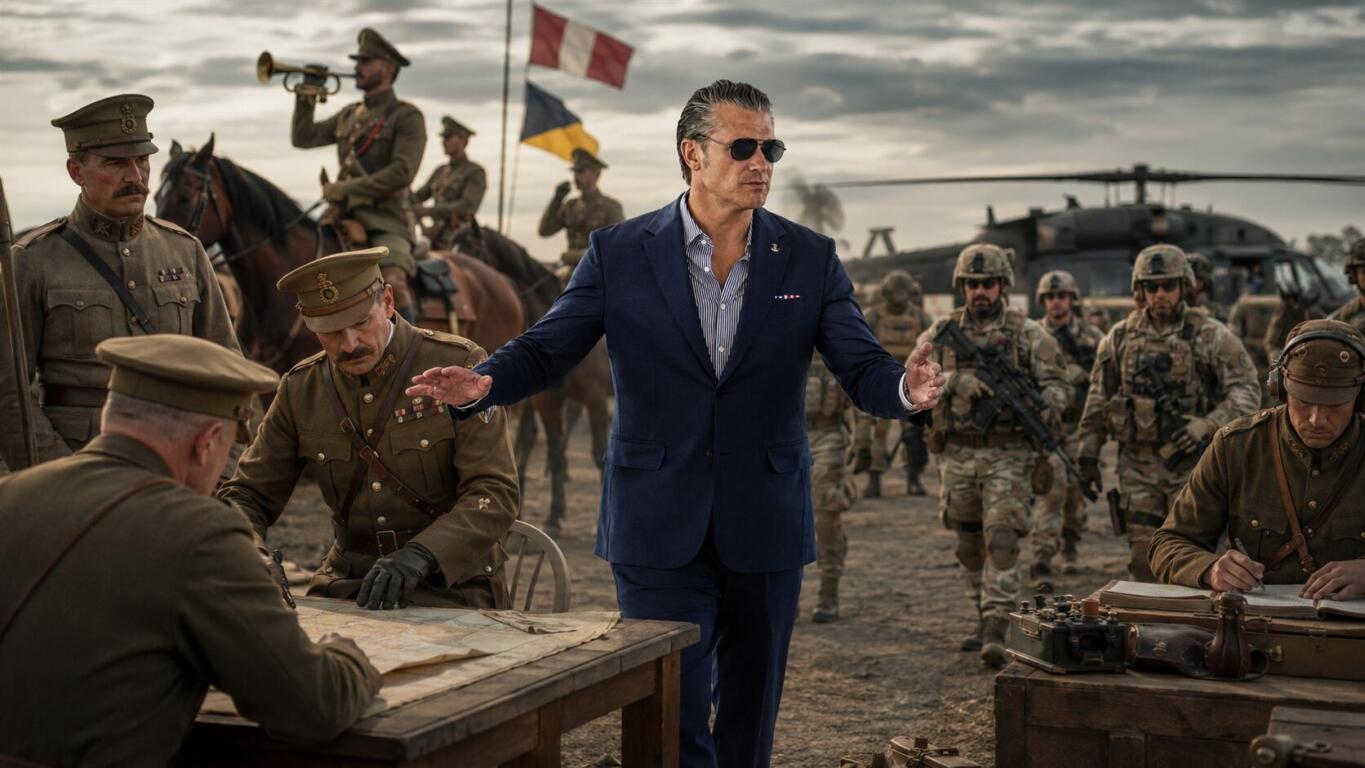
Early recommendations reportedly include reducing reliance on advanced software, increasing the number of maps printed on paper, and requiring officers to spend more time standing around large wooden tables.
One proposal would replace certain battlefield communications systems with handwritten notes delivered by “a sufficiently fast private.”
Hegseth said the military had spent too much time asking whether women could meet combat standards and not enough time asking why they were there in the first place.
“George Washington didn’t have women in infantry units,” Hegseth noted. “He also didn’t have GPS. And he won.”
When reminded that Washington fought an army equipped with muskets and died more than a century before women gained the right to vote, Hegseth called the observation “historically woke.”
The Pentagon is also studying whether battleships should once again feature dramatically larger guns, whether cavalry could play a renewed role in modern combat, and whether military intelligence has become “a little too intelligent.”
Officials emphasized that the modernization-through-regression initiative would not eliminate all contemporary technology.
The military would continue using nuclear weapons, aircraft carriers and ballistic missiles, provided they could be operated by personnel displaying appropriate levels of physical fitness, testosterone, and confidence.
Hegseth rejected criticism that the reforms could leave the United States poorly prepared for 21st-century warfare.
“Our enemies are expecting the military of the future,” he said. “They’re not going to know what hit them when we show up with the military of the past.”
Please share our content below…